Home › Products › Orthopaedics › Calcinase Nasal Spray 3.7ml
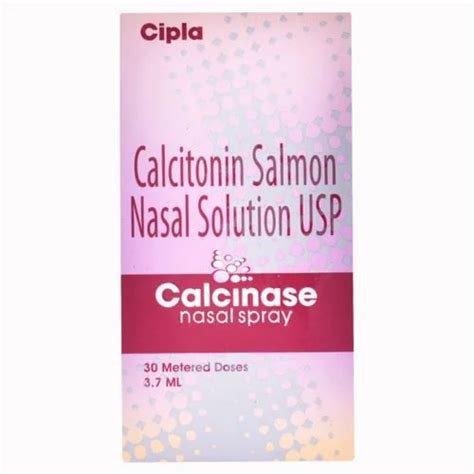
Calcinase Nasal Spray 3.7ml
Salt Composition: CALCITONIN
- Manufacturer: CIPLA LTD
- Pack Size: 1 BOTTLE(s) OF 3.7ML
- Strength: 200IU
- Prescription Required
- Cold Chain
- Prepaid Only. Non-Returnable.
- Storage: Store at room temperature, between 20°C to 25°C (68°F to 77°F). Keep away from moisture, heat, and light. It should not be frozen. Keep away from children and pets.
₹1884.00₹2215.49
Inclusive of all taxes
Product Introduction
Calcinase nasal spray contains calcitonin as its active component. Calcitonin is a hormone that regulates calcium in the body. The thyroid gland produces it naturally and functions by lowering blood calcium levels through inhibition of calcium release from bones and increased calcium excretion via the kidneys. Synthetic versions are used therapeutically to manage specific conditions.
This medication is indicated for postmenopausal osteoporosis, Paget's disease of bone, and hypercalcemia. It prevents bone loss in patients with fractures and strengthens bone structure to reduce further deterioration. Calcinase nasal spray may relieve bone pain in cancer patients with skeletal metastases.
Calcinase nasal spray is contraindicated in individuals with known hypersensitivity or allergy to calcitonin or any formulation component. Allergic reactions may manifest as skin rash, itching, swelling, or difficulty breathing.
This medication reduces blood calcium levels and should not be given to patients with hypocalcemia (low calcium levels). Patients with impaired renal function may require dosage adjustment, as the kidneys eliminate this medication. Close monitoring is necessary to prevent potential drug accumulation.
Calcinase nasal spray may produce gastrointestinal side effects including nausea, vomiting, or diarrhoea.
Uses
Unicalcin nasal spray is used to treat the following: Hypercalcemia Pagetâs disease Postmenopausal osteoporosis Prevention of fracture.
How it works
The therapeutic effect of Unicalcin nasal spray lies in its ability to regulate calcium levels in the body. As a hormone medication, this medication helps to reduce bone resorption and inhibits the release of calcium from bones, leading to decreased blood calcium levels. This effect is particularly beneficial in treating conditions such as osteoporosis, where it can slow down bone loss and potentially reduce the risk of fractures. This medicine also finds application in managing Paget's disease of bone, where it helps control abnormal bone remodeling and alleviates associated symptoms. Moreover, in emergency cases of hypercalcemia, this medication rapidly lowers blood calcium levels, relieving severe symptoms and preventing complications.
How to Use
The usage of Unicalcin nasal spray medication depends on its formulation, which can be injectable, nasal spray, or oral form (tablet). When using the injectable form, it is usually administered subcutaneously or intramuscularly. The nasal spray is administered into one nostril, alternating nostrils daily, and it's essential to follow the specific instructions provided with the product. For oral use, this medication is used in tablet form; it is typically taken with water on an empty stomach or as directed by the healthcare provider. The dosage and frequency of administration vary depending on the medical condition being treated, and it is crucial to adhere to the prescribed regimen.
Side Effects
Unicalcin nasal spray causes some side effects like all medications, although not everyone will experience them. Serious: Allergic reactions Hypocalcemia (lower blood calcium levels) Respiratory issues Gastrointestinal bleeding Common: Nausea Vomiting Diarrhea Headache Flushing of the face or skin Injection site reactions (for injectable formulations)
Expert Tips
Patients with a history of hypersensitivity reactions to Unicalcin nasal spray or its components should avoid its use. Caution is necessary for individuals with existing hypocalcemia or conditions that may predispose them to low calcium levels, as this medication can further lower blood calcium levels. Liver impairment may require dosage adjustments, and patients with certain malignancies should be carefully evaluated before using it. Its safety during pregnancy and breastfeeding has not been extensively studied, so caution is advised. Long-term use may be associated with developing tumor-induced osteomalacia and osteosarcoma (type of bone cancer) in rare cases. Regular monitoring and follow-up with healthcare providers are essential to ensure safe and effective use of this medication.
References
- Novartis Pharmaceuticals Corporation, FDA (Food and Drug Safety Administartion) [Revised on 2011] [Accessed on 21st July 2023], https://www.accessdata.fda.gov/drugsatfda_docs/label/2012/017808s034lbl.pdf
- Essential Pharma (M) Limited, Health Products Regulatory Authority, [Revised on Sep 2020] [Accessed on 21st July 2023], https://www.hpra.ie/img/uploaded/swedocuments/Licence_PA22644-004-001_13112020161254.pdf
- K D Tripathi, Hormones and Drugs affecting calcium balance, Essentials of Medical Pharmacology, 8th Edition, 2019, 360-372.
- Thomas D. Nolin and Peter A. Friedman, Agents Affecting Mineral Ion Homeostasis and Bone Turnover, Goodman & Gilmanâs The Pharmacological Basis of Therapeutics, 13th Edition, 2018, 887-906.
Safety Advice
Pregnancy: Consult your doctor The safety of Unicalcin nasal spray use during pregnancy has not been extensively studied, and its use in pregnant individuals should generally be avoided, and healthcare provider consultation is required.
Lungs: Consult your doctor Patients with lung infections or other respiratory conditions should consult their healthcare providers to ensure the appropriate use of Unicalcin nasal spray or any other medication.
Breastfeeding: Consult your doctor The safety of using Unicalcin nasal spray during breastfeeding has not been well-established, and it is generally recommended to avoid its use while breastfeeding.
Disclaimer
The information provided on this page is intended for general informational purposes only and should not be considered as medical advice. Always consult a qualified healthcare professional before starting, stopping, or changing any medication. Self-medication can be harmful. Med For Rare does not endorse self-diagnosis or self-treatment.