Home › Products › Oncology › Cizumab 300mg Injection
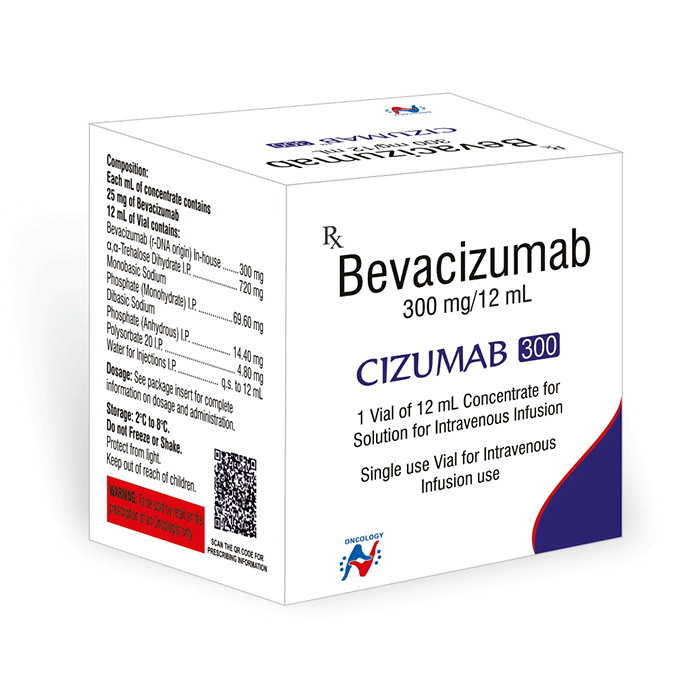
Cizumab 300mg Injection
Salt Composition: BEVACIZUMAB
- Manufacturer: HETERO HEALTHCARE LTD
- Pack Size: 1 VIAL(s)
- Dosage Form: INJECTION
- Strength: 300MG
- Prescription Required
- Cold Chain
- Prepaid Only. Non-Returnable.
- Storage: Store Cizumab 300mg Injection at 2ËC to 8ËC. Do not freeze or shake. Protect from light. Keep out of reach of children.
₹7876.00₹17900.00
Inclusive of all taxes
Product Introduction
Cizumab 300mg Injection is an anticancer medicine containing the active ingredient Bevacizumab. This medicine is formulated to prevent tumour growth. It is indicated in combination with other chemotherapy drugs for the treatment of metastatic breast cancer, brain cancer, cervical cancer, kidney cancer, lung cancer, and colorectal cancer. It is also used to treat cancers of the ovary, fallopian tube, or primary peritoneal cancer. Effective birth control should be used during treatment and for at least six months after the last dose. Cizumab 300mg Injection is not recommended for adolescents and children under 18 years of age. Discuss with your doctor regarding the preservation of ovaries if you are planning pregnancy in the near future, as this medicine may cause fertility issues in women. Breastfeeding should be avoided as this medicine may interfere with growth and development of the infant. Cizumab 300mg Injection is frequently administered in combination with other chemotherapy agents. Constipation, appetite loss, runny nose, fever, skin problems, and weight loss are common side effects of Cizumab 300mg Injection. Before starting treatment with this medicine, inform your doctor if you have high blood pressure, high blood sugar, stomach disorders, or heart problems. This medicine should not be taken for 28 days before and after surgery due to the risk of poor wound healing and high bleeding complications. You are advised to inform your doctor of any dental issues requiring surgery before commencing this medicine. Should you develop any visual changes or confusion, report to your doctor to prevent further complications.
Uses
Cizumab 300mg Injection is indicated to treat the following conditions: Glioblastoma multiforme (brain cancer) Persistent, recurrent, or metastatic breast cancer Metastatic cervical cancer Advanced kidney cancer Metastatic colorectal cancer Advanced non-small-cell lung cancer Liver Cancer- Hepatocellular carcinoma Cancers of the ovary, cervical, fallopian tube, or primary peritoneal cancer
How it works
Cizumab 300mg Injection is a recombinant humanized monoclonal antibody that works as a targeted therapy in the treatment of various advanced cancers. It produces its action by selectively binding to the protein called vascular endothelial growth factor A (VEGF-A), which is present in the lining of blood and lymph vessels in the body. It interrupts the interaction of VEGF-A with its receptors. This further inhibits the formation of blood vessels that supply oxygen and nutrients to the tumour. As a result, it slows down the rate of progression of cancer. Lung Cancer: Cizumab 300mg Injection is a monoclonal antibody that has been approved as a first-line treatment for non-small cell lung cancer. For Non-small lung cancer, VEGF and EGFR are the proteins that are involved in promoting tumour growth in lung cancer. Cizumab 300mg Injection binds to these proteins and prevents the spread of lung cancer to other parts. Colorectal Cancer: Cizumab 300mg Injection has been approved initially for treating colorectal cancer as this medicine works by inhibiting the growth of blood vessels within the tumours. Thereby it retards the growth of tumors in colorectal cancer. Also, the latest study has demonstrated that this medication has improved the overall survival rate of patients with advanced colorectal cancer. Breast Cancer: Cizumab 300mg Injection is used in the treatment of metastatic breast cancer along with chemotherapy medications. This medication works against the formation of blood vessels that feed the breast cancer tissue. By producing this action,it makes the breast cancer cells hard to survive and makes them vulnerable to chemotherapy. Brain Cancer: For treating brain cancer, Cizumab 300mg Injection is used along with other chemotherapy medication to prevent the recurrence of brain tumours. It is exhibited as a last resort for brain tumours. Kidney Cancer: Cizumab 300mg Injection is used in combination with interferon-alpha for the treatment of advanced kidney cancer. This medication is effective in metastatic kidney cancer because in this cancer, there is an overexpression of VEGF protein. Ovarian/ fallopian/peritoneal cancer: Cizumab 300mg Injection has been indicted for its use in treating stage iii and iv ovarian cancer, fallopian and peritoneal cancer, along with chemotherapy medications after the initial surgery. This medication can also be used as maintenance therapy or as first-line therapy for patients with platinum-sensitive or resistant chemotherapy patients. Liver Cancer: Cizumab 300mg Injection has been approved for its treatment of advanced liver cancer in combination with immunotherapy. Studies show that this advanced treatment can be used in the frontline for liver cancer as it has exhibited better survival rate in patients compared to the standard therapy.
How to Use
Your physician or nurse will administer Cizumab 300mg Injection as an intravenous infusion. The infusion should be given immediately after the dilution.
Side Effects
Side effects are unwanted symptoms caused by medicines. Even though all drugs cause side effects, not everyone gets them. The side effects of Cizumab 300mg Injection are listed below: Common: Headache Vision changes Confusion Severe allergic reactions High Blood pressure Delayed wound healing following surgery Protein in urine Severe infections Blood clots in arteries and blood vessels of lungs Gut perforation Nosebleeds and bleeding risk Heart problems with an increase in heart rate Mouth sores, dryness Shortness of breath Rare: Numbness in hands or feet Weakness and lack of energy Diarrhoea, nausea, vomiting, abdominal pain Constipation Loss of appetite Weight loss Changes in taste and speech Decrease in counts of white blood cells Fever Dry skin Back pain
Expert Tips
It is vital to inform your physician before taking Cizumab 300mg Injection if you have the following conditions: Have conditions involving inflammation in the stomach (ulcer, colitis). Experience allergic reactions to Cizumab 300mg Injection or its ingredients. Have recently undergone surgery as it is associated with the risk of bleeding. Have diabetes, hypertension, or heart problems.
References
- Roche Products Limited, Electronic Medicines Compendium (EMC), [Revised on Jan 2022] [Accessed on 21/11/2022], https://www.medicines.org.uk/emc/files/pil.3885.pdf
- G.G. Dark, A.R. Abdul Razak, Oncology, Davidson's Principles & Practice of Medicine, 22nd Edition, 2014, 259-282.
- KD Tripathi, Anticancer Drugs, Essentials of Medical Pharmacology, 8th Edition, 2019, 915-936.
- Edward Chu, Cancer Chemotherapy, Langeâs Basic and Clinical Pharmacology, 14th Edition, 2018, 948-976.
- Roche Group, U.S FDA, [Revised on Jan 2021][ Accessed on 21/11/2022], https://www.gene.com/download/pdf/avastin_prescribing.pdf
- Roche Group,Bevacizumab Injection, Indication,[Revised on 2020] [Accessed on 21/11/2022] https://www.avastin.com/patient/mcrc.html
Safety Advice
Pregnancy: Consult your doctor Inform your physician before starting your treatment with Bevacizumab Injection in case if you are pregnant or planning for pregnancy, as this medicine may cause harm to the unborn baby and interrupt the formation of blood vessels.
Lungs: Consult your doctor Inform your physician before starting Cizumab 300mg Injection if you have lung disease to avoid any serious side effects.
Breastfeeding: unsafe It is recommended to avoid breastfeeding for a minimum of 6 months after your treatment with Cizumab 300mg Injection as this medicine may interfere with the growth of your child.
Disclaimer
The information provided on this page is intended for general informational purposes only and should not be considered as medical advice. Always consult a qualified healthcare professional before starting, stopping, or changing any medication. Self-medication can be harmful. Med For Rare does not endorse self-diagnosis or self-treatment.