Home › Products › Cardiology › Ngmine 250mg Injection
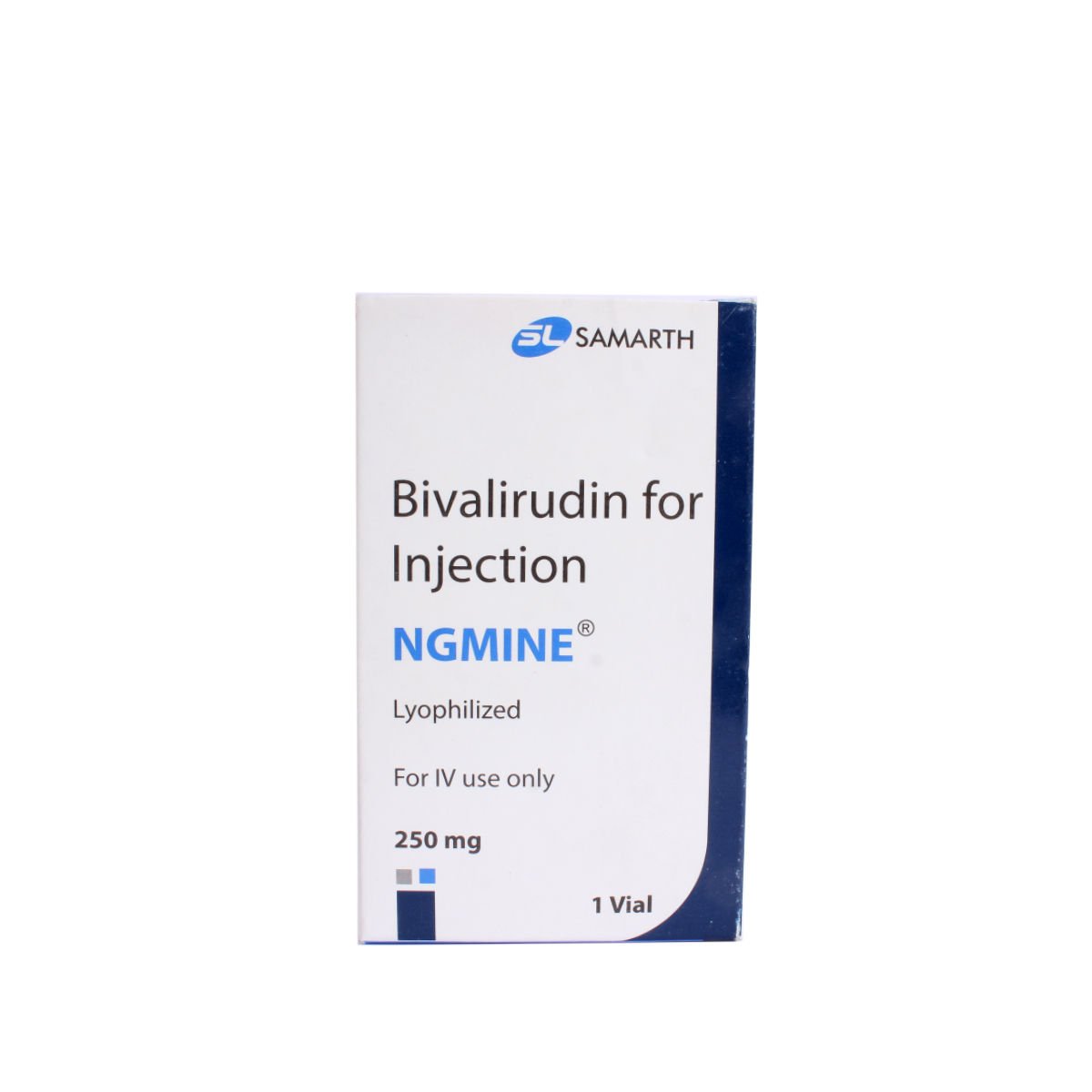
Ngmine 250mg Injection
Salt Composition: BIVALIRUDIN
- Manufacturer: SAMARTH LIFE SCIENCES PVT LTD
- Pack Size: 1 VIAL(s)
- Dosage Form: INJECTION
- Strength: 250MG
- Prescription Required
- Storage: Store at room temperature, between 20-25°C Keep away from moisture, heat, and light. It should not be frozen. Keep away from children and pets.
₹7083.00₹8766.19
Inclusive of all taxes
Product Introduction
Ngmine 250 mg injection contains bivalirudin as its active component. It is an anticoagulant medication used in cardiology, primarily employed in patients undergoing percutaneous coronary intervention (PCI) or angioplasty to reduce the risk of blood clot formation during the procedure. It serves as an alternative to heparin in patients at risk of or with a history of heparin-induced thrombocytopenia (HIT), a potentially serious complication of heparin therapy.
Patients with known hypersensitivity or allergy to bivalirudin or any of its components should not receive this medication. As an anticoagulant, it increases the risk of bleeding and is contraindicated in patients with active, severe, or life-threatening bleeding, including gastrointestinal bleeding, intracranial bleeding, or bleeding disorders. It may not be suitable for patients with severely uncontrolled hypertension.
Patients with severe renal impairment or end-stage renal disease may require dosage adjustment or alternative anticoagulation strategies, as the medication can accumulate and increase bleeding risk. Patients with known coagulation disorders or conditions predisposing them to bleeding may not be suitable candidates for this medication. It is not recommended for patients with significant thrombocytopenia or a history of heparin-induced thrombocytopenia (HIT) unless no suitable alternatives exist.
The medication may not be appropriate for patients who have undergone recent major surgical procedures or experienced significant trauma due to increased bleeding risk. It is not recommended as the sole anticoagulant for patients with infective endocarditis or other conditions requiring extended anticoagulation duration. Ngmine 250 mg injection can be used in elderly patients, though caution is advised. It is not typically used in paediatric populations.
Uses
Percutaneous coronary intervention (PCI) Heparin-induced thrombocytopenia (HIT) Anticoagulation during cardiac surgery
How it works
Ngmine 250 mg injection directly inhibits thrombin, a critical enzyme in the blood clotting process. Blocking thrombin prevents the conversion of fibrinogen into fibrin, effectively inhibiting blood clot formation. This mechanism is particularly useful in medical procedures like percutaneous coronary intervention (PCI) to maintain blood flow in coronary arteries while minimizing the risk of clot formation, thanks to its rapid onset and reversible effects.
How to Use
Ngmine 250 mg injection is administered via the intravenous (IV) route. It is important to follow the dosing instructions provided on the product's packaging or as your healthcare provider recommends.
Side Effects
Ngmine 250 mg injection causes some side effects like all medications, although not everyone will experience them. Serious: Bleeding Allergic reactions Thrombosis Common: Bleeding Pain at injection site Headache
Expert Tips
Ngmine 250 mg injection increases the risk of bleeding, so careful monitoring is crucial, especially in patients with kidney problems who may need dosage adjustments. While it has minimal impact on liver function, severe liver disease should still be monitored. Verify any allergies to heparin and take steps to prevent blood clot formation with appropriate dosing and monitoring. Be cautious of potential drug interactions, be prepared to manage allergic reactions, and use this medication during pregnancy or breastfeeding only when the benefits outweigh the risks. Limited data are available for pediatric use, and elderly patients may require extra monitoring. Additionally, be careful with alcohol consumption and avoid driving or operating heavy machinery if experiencing dizziness or other side effects.
References
- KD Tripathi, Essentials of Medical Pharmacology, Drugs affecting coagulation, bleeding and thrombosis, 7th edition, 2013, 617, 620.
- Medicines company, US Food and Drug Administration, [ Revised on March 2016], [ Accessed on April 2021], https://www.accessdata.fda.gov/drugsatfda_docs/label/2016/020873s036lbl.pdf
- Accord Healthcare, Electronics Medicine compendium (EMC), [ Revised on May 2016], [ Accessed on 27th Sept 2023], https://www.medicines.org.uk/emc/files/pil.7229.pdf
Safety Advice
Pregnancy: Consult your doctor Ngmine 250 mg injection may be used in pregnant women only if the potential benefits outweigh the risks and under the supervision of a healthcare provider.
Lungs: Consult your doctor Ngmine 250 mg injection primarily affects the blood's clotting ability and does not directly affect the lungs, it's advisable to consult your healthcare provider.
Breastfeeding: Consult your doctor Ngmine 250 mg injection may be present in breast milk in small amounts, and its effects on nursing infants are poorly studied. It is advisable to consult your healthcare provider.
Disclaimer
The information provided on this page is intended for general informational purposes only and should not be considered as medical advice. Always consult a qualified healthcare professional before starting, stopping, or changing any medication. Self-medication can be harmful. Med For Rare does not endorse self-diagnosis or self-treatment.