Home › Products › Nephrology › Relipoietin 4000 IU Injection
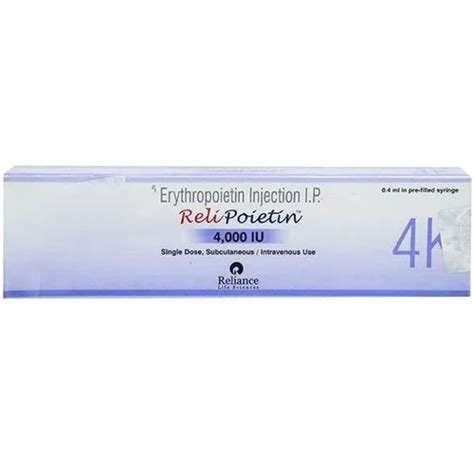
Relipoietin 4000 IU Injection
Salt Composition: RECOMBINANT HUMAN ERYTHROPOIETIN ALFA/EPOETIN ALFA
- Manufacturer: RELIANCE LIFE SCIENCES PVT LTD
- Pack Size: 1 PREFILLED SYRINGE(s) OF 0.4ML
- Dosage Form: INJECTION
- Strength: 4000IU
- Prescription Required
- Cold Chain
- Prepaid Only. Non-Returnable.
- Storage: Should be stored at room temperature, between 2°C to 8°C Keep away from moisture, heat, and light. It should not be frozen. Keep away from children and pets.
₹479.00₹1197.19
Inclusive of all taxes
Product Introduction
Relipoietin 4000 IU injection contains the active component recombinant human erythropoietin alfa (epoetin alfa). It is an erythropoiesis-stimulating agent (ESA) used to treat anaemia caused by chronic kidney disease (CKD), cancer chemotherapy, or HIV infection treatment with zidovudine. The medication also reduces the need for red blood cell transfusions in patients at high risk for blood loss due to planned surgery or other procedures.
Relipoietin 4000 IU injection is contraindicated in patients with hypersensitivity to the drug or any of its components, uncontrolled hypertension, active thrombotic microangiopathy (TMA), pure red cell aplasia (PRCA), uncontrolled seizures, pregnancy, or lactation. Caution is advised in patients with a history of blood clots, heart disease, stroke, kidney disease, liver disease, thalassemia, sickle cell anaemia, myelodysplastic syndrome, leukaemia, or cancer. Use in children under 18 years should only occur when benefits outweigh risks. Older adults require close monitoring for side effects during treatment.
Uses
Relipoietin 4000IU injection is used in the following: Anemia due to Chronic kidney disease (CKD) Anemia due to Cancer chemotherapy Anemia due to HIV infection treatment with zidovudine
How it works
Relipoietin 4000IU injection works by stimulating the bone marrow to produce more red blood cells. Red blood cells carry oxygen to the body's tissues, so increasing the number of red blood cells can help to treat anemia.
How to Use
Relipoietin 4000IU is injected subcutaneously, which means under the skin. It is usually given in the abdomen, thigh, or upper arm.
Side Effects
Relipoietin 4000IU injection causes some side effects like all medications, although not everyone will experience them. Serious Blood clots Stroke Heart attack Death High blood pressure Seizures Tumor growth Allergic reactions Kidney problems Liver problems Bone marrow problems Common Headache Nausea Vomiting Diarrhea Muscle cramps Pain at the injection site Redness, swelling, or itching at the injection site Fatigue Dizziness Chills Fever
Expert Tips
Tell your doctor about all your medical conditions, including high blood pressure, heart disease, stroke, kidney disease, liver disease, and cancer. Be careful if you have a history of blood clots. Monitor your blood pressure regularly while taking Relipoietin 4000IU injection. Get regular blood tests to monitor your red blood cell count and other blood levels. Do not self-inject this medication It should only be injected by a doctor or nurse. If you experience any side effects, tell your doctor immediately. Be careful when getting up from a sitting or lying position to avoid dizziness. Drink plenty of fluids to help prevent dehydration, which can increase your risk of blood clots. Talk to your doctor if you have any concerns about taking this medication.
References
- Janssen-Cilag Ltd, Electronic medicines compendium (emc), [Revised date March 2019], [Accessed date 30th August 2023], https://www.medicines.org.uk/emc/product/3442/pil
- Ortho Biotech Products, L.P, US Food and Drug Administration, [Revised date Aug 2008], [Accessed date 2nd April 2021], https://www.accessdata.fda.gov/drugsatfda_docs/label/2007/103234s5163lbl.pdf
- KD Tripathi, Essentials of Medical Pharmacology, Haematinics and erythropoietin, 7th edition, 2013, 611.
Safety Advice
Pregnancy: Consult your doctor If you are pregnant or planning to become pregnant, talk to your doctor about the risks and benefits of Relipoietin 4000IU injection.
Lungs: Consult your doctor If you have lung conditions, it is advisable to consult your healthcare provider before taking Relipoietin 4000IU injection.
Breastfeeding: Consult your doctor Relipoietin 4000IU injection's safety during breastfeeding is not well established. Consult a healthcare provider before using this medication while breastfeeding.
Disclaimer
The information provided on this page is intended for general informational purposes only and should not be considered as medical advice. Always consult a qualified healthcare professional before starting, stopping, or changing any medication. Self-medication can be harmful. Med For Rare does not endorse self-diagnosis or self-treatment.