Home › Products › Infectious Disease › Ticarnic 3.1gm Injection
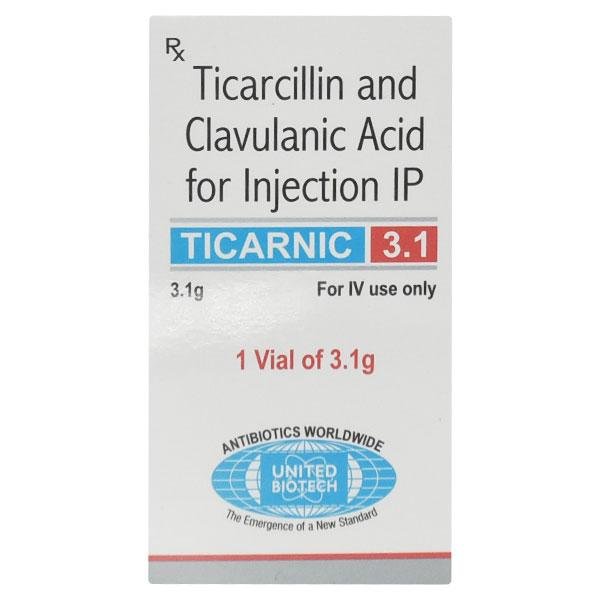
Ticarnic 3.1gm Injection
Salt Composition: TICARCILLIN,CLAVULANIC ACID
- Manufacturer: UNITED BIOTECH PVT LTD
- Pack Size: 1 VIAL(s)
- Dosage Form: INJECTION
- Strength: 3.1GM
- Prescription Required
- Storage: Stored at controlled room temperature, between 20°C to 25°C (68°F to 77°F). Keep away from moisture, heat, and light. It should not be frozen. Keep away from children and pets.
₹812.00₹1014.38
Inclusive of all taxes
Product Introduction
Ticarnic 3.1gm Injection contains ticarcillin and clavulanic acid as active components. Ticarcillin is a penicillin-class antibiotic. Clavulanic acid is a beta-lactamase inhibitor. The combination is used to treat serious infections including respiratory tract infections, urinary tract infections, skin and soft tissue infections, intra-abdominal infections, and septicemia. Clavulanic acid inhibits beta-lactamase enzymes, allowing ticarcillin and other penicillin antibiotics to remain effective against beta-lactamase-producing bacteria.
Patients with hypersensitivity or allergy to penicillins, cephalosporins, or other beta-lactam antibiotics should not receive this medication. Ticarnic 3.1gm Injection is not recommended for patients with mononucleosis or suspected viral infections, as it is indicated for bacterial infections only.
The medication is eliminated through the kidneys. Patients with severe renal impairment may require dose adjustments or alternative treatment, and caution is necessary. Ticarnic 3.1gm Injection contains a high potassium content. Patients with hyperkalemia (elevated blood potassium levels) require caution due to the risk of further potassium elevation.
Uses
Respiratory tract infections Urinary tract infections (UTIs) Intra-abdominal infection Skin and soft tissue infections (cellulitis, infected wounds) Bone and joint infections (osteomyelitis and septic arthritis) Gynecological infections (pelvic inflammatory disease (PID) and postpartum endometritis) Septicemia and bloodstream infections
How it works
The Ticarnic 3.1gm Injection combination enhances ticarcillin's effectiveness against a wide range of bacteria. Clavulanic acid inhibits beta-lactamase enzymes that can render ticarcillin ineffective, expanding its coverage. This synergy improves treatment outcomes in bacterial infections, especially those caused by beta-lactamase-producing bacteria.
How to Use
It is essential to follow the healthcare professional's instructions to use Ticarnic 3.1gm Injection. The medication is typically administered via injection by a healthcare provider in a hospital setting. The dosage and duration of treatment depend on the specific infection, the patient's weight, and other individual factors.
Side Effects
Ticarnic 3.1gm Injection cause some side effects like all medications, although not everyone will experience them. Serious: Severe allergic reactions (rash, itching, swelling, severe dizziness, difficulty breathing) Severe skin reactions (Stevens-Johnson syndrome or toxic epidermal necrolysis) Liver dysfunction Hepatitis Clostridium difficile-associated diarrhea Agranulocytosis (severe decrease in white blood cells) Thrombocytopenia (low platelet count) Common: Diarrhea Nausea and vomiting Skin rash or itching Headache Abdominal discomfort or pain Thrush (oral or vaginal fungal infection)
Expert Tips
Regarding your health and medication usage, it is important to prioritize open communication with your healthcare provider. Make sure to provide them with a comprehensive overview of your medical history, including any existing conditions, medications you are currently taking, or any allergies you may have. Elderly individuals may be more sensitive to the effects of Ticarnic 3.1gm Injection. Age-related changes in metabolism reduce cardiac reserve, and other factors can increase the risk of adverse reactions. Close monitoring and appropriate dose adjustments are necessary for the elderly. Individuals with liver or kidney impairment should be closely monitored during treatment. Pregnant and breastfeeding women should consult a doctor before taking it. Lastly, use caution in pediatric patients and discuss the potential risks and benefits with a healthcare professional.
References
- GlaxoSmithKline, US Food and Drug Administration, [Revised on July 2008],[Accessed on 6th June 2023], https://www.accessdata.fda.gov/drugsatfda_docs/label/2010/050658s023,050590s058,050590s059lbl.pdf
- KD Tripathi. Beta-Lactam Antibiotics, Essentials of medical pharmacology. Seventh edition, 2013, 723
Safety Advice
Pregnancy: Consult your doctor The use of Ticarnic 3.1gm Injection during pregnancy should be discussed with the healthcare provider. They will consider the specific circumstances, the patient's medical history, and individual factors to make an informed decision.
Lungs: Consult your doctor Suppose you have a pre-existing lung condition or are concerned about the safety of the Ticarnic 3.1gm Injection in your lungs. Consulting with your healthcare provider for personalized advice is recommended in that case.
Breastfeeding: Consult your doctor The safety of Ticarnic 3.1gm Injection during breastfeeding is not well studied, and it is recommended to exercise caution.
Disclaimer
The information provided on this page is intended for general informational purposes only and should not be considered as medical advice. Always consult a qualified healthcare professional before starting, stopping, or changing any medication. Self-medication can be harmful. Med For Rare does not endorse self-diagnosis or self-treatment.