Home › Products › Neurology › Tysabri 300mg Injection
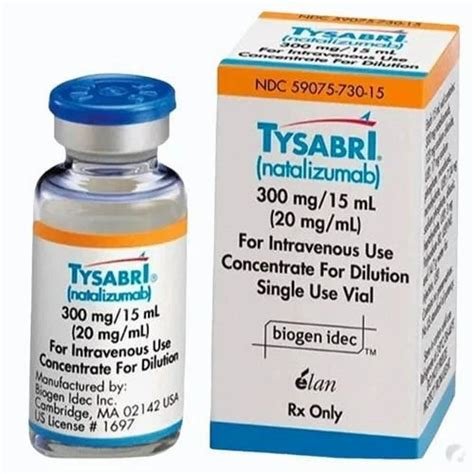
Tysabri 300mg Injection
Salt Composition: NATALIZUMAB
- Manufacturer: BIOGEN IDEC BIOTECH INDIA PVT LTD
- Pack Size: 1 VIAL(s)
- Dosage Form: INJECTION
- Strength: 300MG
- Prescription Required
- Cold Chain
- Prepaid Only. Non-Returnable.
- Storage: Store at room temperature, between 2°C to 8°C (36°F to 46°F). Keep away from moisture, heat, and light. It should not be frozen. Keep away from children and pets.
₹86962.00₹108702.00
Inclusive of all taxes
Product Introduction
Tysabri 300mg Injection contains the active ingredient natalizumab. It is a monoclonal antibody medicine used to treat multiple sclerosis (MS) and Crohn's disease. Multiple sclerosis is a long-term autoimmune disorder that affects the central nervous system, disrupting communication between the brain and the rest of the body. Crohn's disease is a chronic inflammatory bowel condition that affects the digestive tract. Tysabri 300mg Injection works by blocking the movement of specific immune cells responsible for inflammation, helping reduce damage to the central nervous system in MS and controlling inflammation in the intestines in Crohn's disease. By effectively controlling disease activity, Tysabri 300mg Injection may improve quality of life by relieving symptoms, reducing the frequency of relapses, and potentially slowing the progression of disability. Tysabri 300mg Injection may trigger hypersensitivity reactions in some individuals. Patients with a known allergy to natalizumab or any of its ingredients should avoid using this medicine, and those at increased risk should undergo appropriate evaluation before treatment. This medicine is contraindicated in patients with a history of progressive multifocal leukoencephalopathy (PML) or those who test positive for the JC virus, as they have a greater risk of developing PML during therapy. It should also not be used in patients with active infections, particularly severe or opportunistic infections. The safety and efficacy of Tysabri 300mg Injection have not been fully established in children and adolescents; therefore, its use is generally not recommended in the pediatric population.
Uses
Tysabri 300mg injection is used to treat the following: Multiple sclerosis (MS) Crohn's disease.
How it works
Tysabri 300mg injection is a monoclonal antibody that works by targeting a protein called α4-integrin on certain immune cells. By binding to α4-integrin, it prevents these immune cells from crossing the blood-brain barrier in multiple sclerosis or migrating into the gut lining in Crohn's disease. This action reduces inflammation and helps protect the central nervous system in MS, leading to fewer relapses and slowed disease progression. Overall, its mechanism of action modulates the immune response, providing therapeutic benefits in treating multiple sclerosis and Crohn's disease.
How to Use
Tysabri 300mg injection should be taken exactly as prescribed by a healthcare professional. The route of administration for this medication is intravenous (IV) infusion. The medication is delivered directly into the bloodstream through a vein. It is not available in oral form or as a subcutaneous injection.
Side Effects
Tysabri 300mg injection causes some side effects like all medications, although not everyone will experience them. Serious: Progressive multifocal leukoencephalopathy (PML) Infusion reactions Liver damage Infections Hypersensitivity Common: Headache Fatigue Nausea Upper respiratory tract infections (common cold) Urinary tract infections
Expert Tips
For Tysabri 300mg injection safe use close monitoring for signs of progressive multifocal leukoencephalopathy (PML), a rare but serious brain infection, as well as hypersensitivity reactions during or after infusion. Regular liver function tests should be performed to detect any liver damage. Patients should be vigilant for signs of infections, and concomitant use with other immunomodulatory medications should be carefully considered. Prior screening for hepatitis B virus (HBV) is recommended, and live vaccines should not be administered during treatment. Pregnant or breastfeeding individuals should consult their healthcare provider before starting or continuing this medication. It is essential to discuss all medical conditions and medications with the healthcare provider to ensure the safe and appropriate use of these medications and to address any potential risks.
References
- Biogen Netherlands BV, Electronic medicines compendium (emc), [Revised on 15th July 2022] [Accessed on 30th July 2023], https://www.medicines.org.uk/emc/product/222/smpc#gref
- Elan Pharmaceuticals, Inc, US Food and Drug Administration, [Revised on 08/2017][ Accessed on 30th July 2023], https://www.accessdata.fda.gov/drugsatfda_docs/label/2017/1215104s959lbl.pdf
- Rachel Branstadter, Ilana Katz Sand; The use of Tysabri 300mg injection for multiple sclerosis; Neuropsychiatrist Disease and Treatment; Published on June 2017; Accessed on 30th July 2023; http://www.ncbi.nlm.nih.gov/pmc/articles/pmc5499927/
Safety Advice
Pregnancy: Consult your doctor Pregnant women or those planning to become pregnant should discuss all potential risks and benefits of using Tysabri 300mg injection with their healthcare provider. They will assess the risks and benefits of continuing the medication during pregnancy and discuss alternative treatments if necessary.
Lungs: Consult your doctor Patients taking Tysabri 300mg injection should promptly report any respiratory symptoms to their healthcare provider and adhere to prescribed treatments to manage their underlying condition effectively.
Breastfeeding: Consult your doctor The safety of Tysabri 300mg injection during breastfeeding is not fully established, and the healthcare provider will provide personalized advice to make an informed decision regarding the use of the medication during this period, considering the well-being of both the mother and the baby.
Disclaimer
The information provided on this page is intended for general informational purposes only and should not be considered as medical advice. Always consult a qualified healthcare professional before starting, stopping, or changing any medication. Self-medication can be harmful. Med For Rare does not endorse self-diagnosis or self-treatment.